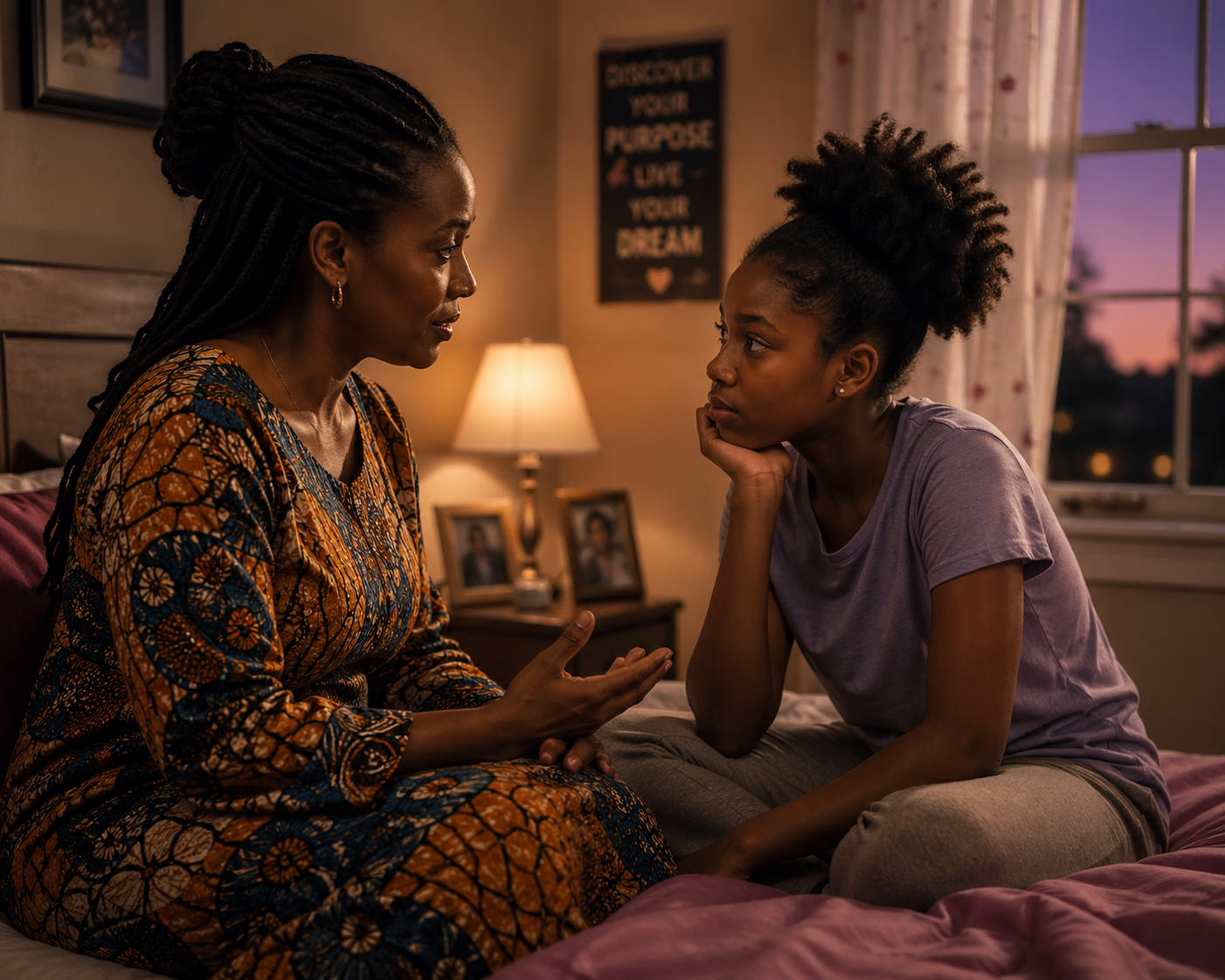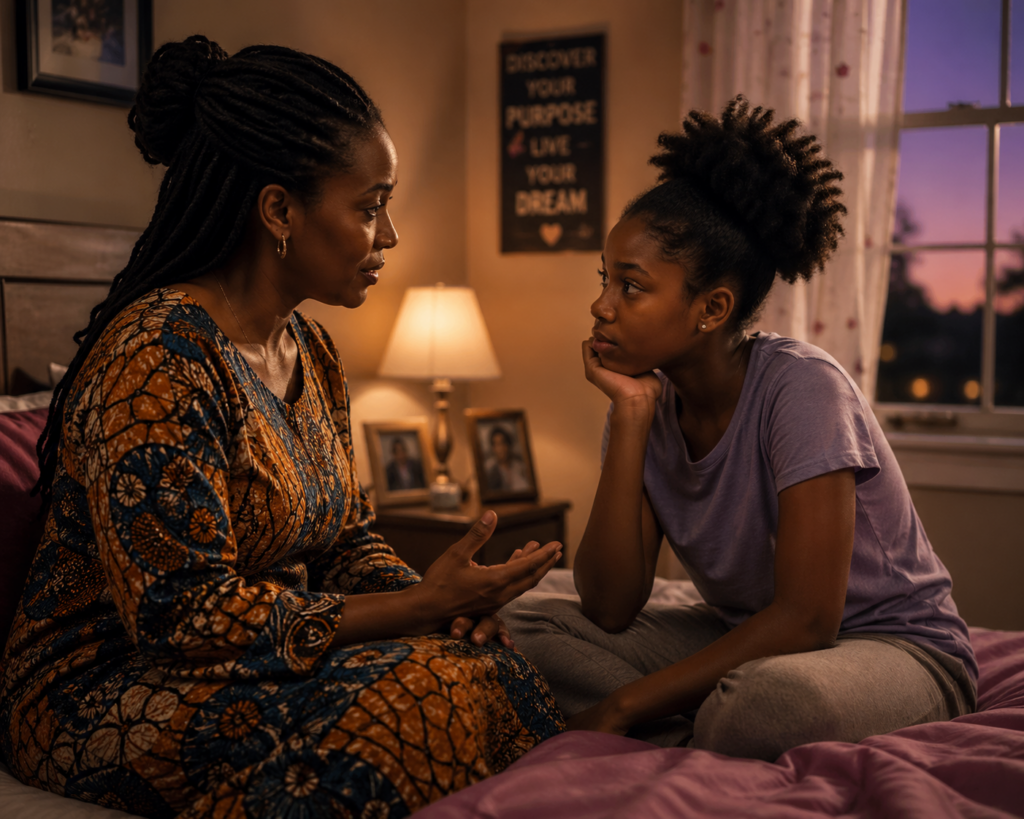
I peeped into my daughter’s bedroom that evening. Two nights before our trip to Nigeria, her room looked like a small war zone.
Clothes were everywhere, on the bed, draped over the chair, spilling out of her suitcase like they were trying to escape.
“Mummy, this is too much,” she said, holding up a pair of sandals with visible irritation. “Why are we even packing these many things? It’s just a holiday.”
“It’s not just a holiday,” I said, folding her Ankara dress again, the same one she had unfolded. “We’ll be there for three weeks.”
“Exactly!” She dropped onto the bed dramatically. “Three weeks! And you said we’re only staying in Lagos for five days. What are we even doing in the village for that long?”
I smiled but didn’t answer immediately.
“Mummy,” she continued, sitting up now, “there’s no Wi-Fi there. And my cousin said network is bad. Like bad bad. What am I supposed to do? Just exist?”
I laughed under my breath.
“You won’t die,” I said.
She narrowed her eyes at me. “Easy for you to say. You grew up there. I didn’t.”
I paused then, my hands stilling over her suitcase.
“No,” I said quietly. “You didn’t.”
She watched me, her annoyance fading into curiosity.
“But that village…” I added, turning to her, “is the reason you’re here today.”
She frowned. “What does that mean?”
“It means,” I said, sitting beside her, “that if certain things had not happened in that village, you would not be sitting here arguing with me about Wi-Fi.”
She blinked. “That sounds dramatic.”
“It is,” I said. “Now sit properly and listen.”
She shifted, folding her legs beneath her.
“Okay,” she said. “I’m listening.”
I took a breath and began.
“My mother told me I nearly didn’t survive.”
Not in the dramatic way people say it now, with hospital machines and doctors in white coats rushing around. In my hometown, a small village a few miles from Abeokuta, in those days, death did not make noise before it came. It arrived quietly, like harmattan dust, settling into homes before anyone understood what was happening.
I was eight years old, that year, sometime in the late 1960s, when the roads to our village were still narrow red paths, and the air always smelled of wood smoke, palm oil, and wet earth after rain. We lived in a compound made of mud walls and a rusted zinc roof that sang loudly whenever the rain fell. There were three small huts arranged around a wide-open courtyard, and in the centre stood a mango tree.
That was where we played, my brother and I. That was where we ran barefoot, chasing each other in circles until our mother shouted at us to slow down before we fell and broke our heads.
His name was Ayo and he was two years older than me. He liked to pretend he was already a man. He would carry firewood on his head and puff out his chest, or follow our father to the farm, returning with stories that sounded bigger than his small body.
“You are just a girl,” he would tease me. “You cannot climb that tree.”
And I would climb it anyway, scratching my knees and refusing to cry when I slipped.
We were like that; always arguing, always laughing, always together.
Until the strange sickness came.
At first, it was just whispers. One child in the next compound fell ill. Then another, two streets away. Then two more, then another three more. Mothers began to speak in hushed voices as they traded in the market or fetched water from the stream.
“They say it starts with fever.”
“They say blisters will come.”
“They say it is a curse.”
Nobody knew what this strange sickness was, or where it came from. The village herbalists tried everything. I still remember the smell of their mixtures of sharp leaves, burnt roots, bitter liquids that made your tongue curl. They chanted incantations, tied charms around children’s wrists, rubbed dark pastes into their skin. But nothing worked.
The disease spread like fire through dry grass. From one house to another. Then another. Soon children began to die.
When it reached our compound, Ayo fell sick first. He came back from the farm one afternoon quieter than usual; his body was hot when my mother touched his forehead.
“Maybe it is just fever,” she said, but her voice had already changed.
That night, he could not sleep. He tossed and turned, sweating, muttering words that did not make sense. By morning, small blisters had begun to form around his mouth.
I remember standing at the doorway, watching my mother try to feed him pap. He turned his head away, his lips cracked and swollen.
“I don’t want it,” he whispered.
“Jo, oko mi, gba, je die,” but he refused her pleas.
By evening, I too began to feel strange. My body grew heavy, the world around me blurred, and I remember my mother’s hands on my face, her voice trembling.
“Egbami, not you too. God, please.”
But it was already too late.
Those days passed like a fever dream. I remember feeling heat that felt like I was burning from inside. I remember my mother forcing bitter herbs into my mouth, even when I cried. I remember her wrapping me tightly in cloth, saying it would draw the sickness out, even though I felt like I was suffocating.
I remember my father, who was not a man given to fear, sitting quietly in the corner, his head in his hands.
And I remember Ayo. Even in my weakness, I listened for him. Sometimes I heard him groan as he lay on his mat. Sometimes I heard my mother singing softly to him, the same songs she used to sing when we were younger.
Then one morning, I woke up to a sound I had never heard before.
A wail.
It tore through the air, raw and sharp, like something had broken inside the world itself.
My mother was wailing.
I tried to sit up, but my body refused. My limbs felt like wood, my throat was dry, my lips cracked.
“What is happening?” I wanted to ask, but no sound came out.
Footsteps rushed into the compound. Several voices overlapped.
“Ki lo shele? What happened?”
“Is he gone?”
“Ah! God have mercy!”
I knew then, even before anyone told me. My brother was dead.
That was the first time I understood that death could come for someone you loved and leave you behind.
I lay there, too weak to cry properly, tears slipping silently into my ears. I remember thinking, with a child’s strange logic: Maybe I will follow him. Maybe this is how it happens: first him, then me.
And strangely, I was not afraid. I was just tired. I was already getting weaker and weaker.
Later, my mother would tell me that she had resigned herself to losing both children. That she had sat beside me that morning, watching my chest rise and fall, counting each breath like it was a miracle that could stop at any moment.
She had already buried one child. She did not think she would survive in the village without any.
Then two days later, something unexpected happened.
The village gong rang out.
“Gom! Gom! Gom! Gom!”
It was loud and urgent, cutting through the heavy silence that had settled over everything.
Even in my weak state, I heard it clearly. The town crier’s voice followed, strong and commanding:
“People of the village! Come to the square! Strangers have come from the city with medicine! They say it can cure the sickness!”
For a moment, nobody moved. Hope had become a dangerous thing. But then suddenly, there was movement. Raised voices, running feet.
My mother did not hesitate. She picked me up from the mat where I was lying, and tied me to her back with a wrapper, her hands trembling but determined. She did not wear shoes. She did not lock the door. She did not even look back.
She ran.
Later, she would tell me she did not feel the stones cutting into her feet. She did not feel the sun burning her skin. All she could think was: Let my child live, let at least one of them live.
The village square was already full when we arrived. I remember it faintly, the blur of bodies, the noise, the confusion. Women crying, children whimpering, men shouting questions into the air.
I saw them, these strangers. They were different from us, lighter-skinned, dressed in clothes that looked too clean for our dusty village. There were also Nigerians among them, men and women in white clothing, carrying boxes. They were doctors and nurses. Missionaries.
At the time, I did not know those words. I only knew that they looked like people who had come from another world.
My mother pushed through the crowd, her voice desperate.
“Please! Help my child!”
One of the nurses took me gently from her back. I remember the coolness of her hands, the strange smell of the medicine they carried.
They spoke to my mother, but she did not understand English well. She nodded anyway, her eyes fixed on me.
I was the third child they attended to. My mother always said that was God’s doing. That if she had been fourth, or fifth, maybe the medicine would have finished.
They gave me the medicines; I don’t remember the exact moment. Only fragments: the prick of a needle, the bitter taste of something poured into my mouth, the feeling of being held down as my body resisted. And then… sleep.
When I woke up days later, the fever had broken, the heat was gone and the blisters had begun to dry. I could sit up. I could drink water without pain. I was alive.
But Ayo was not. My mother never let me forget that.
Not in a cruel way, and never in a way that made me feel guilty. But always in a way that reminded me that my life was not ordinary.
“God saved you for a reason,” she would say. “There is something you must do with your life.”
She would tell me about that day in the village square. About the kind doctor who had smiled at her, even though she did not understand his words. About how calm he was, how certain.
“That is what you will become,” she said one day, her voice firm. “A doctor.”
It sounded impossible. Girls in our village did not become doctors – they got married, had children, and stayed. But my mother was not a woman who accepted limits easily.
My father did not agree with her initially. I remember overhearing their arguments at night, when they thought I was asleep.
“If it was the boy, I would understand,” he said once. “But this is a girl.”
“The boy is gone,” my mother replied quietly. “But the girl is here.”
“She will marry,” he insisted.
“She will become a doctor,” my mother said. “Even if I have to fight for it.”
And she did. She fought with everything she had. She expanded her farm and sold her products at the market. She learnt how to make beaded necklaces. She learnt how to make Adire material. She worked late into the nights, tying, dyeing, threading.
She kept me in school when other girls my age were already learning how to run a household. She pushed me to study, to read, to believe in something bigger than the life I could see around me.
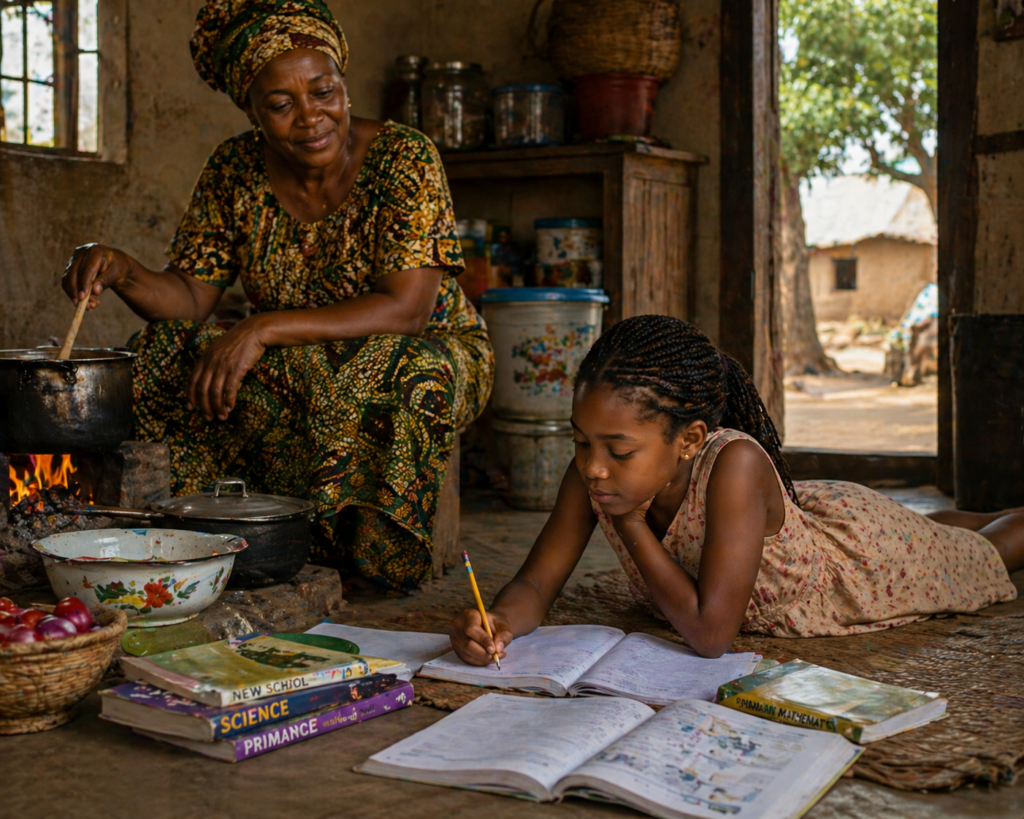
Sometimes I resented it. Sometimes I wanted to be like the other girls, free from the pressure, free from the expectations.
But my mother never let me forget.
“You were not supposed to be here,” she would say softly. “So do something with it.”
So I did. I remember how she would smile in satisfaction when I brought my reports back home from school. And when I finished secondary school, she killed a chicken and cooked it specially for dinner that evening.
Afterwards, I went to the University of Ibadan. I studied medicine. I became the first girl from our village to do so.
When I got the scholarship to study in London, my mother cried like a child.
When she took me to the airport, she held my hands tightly.
“Make me proud,” she said.
“I will,” I promised.
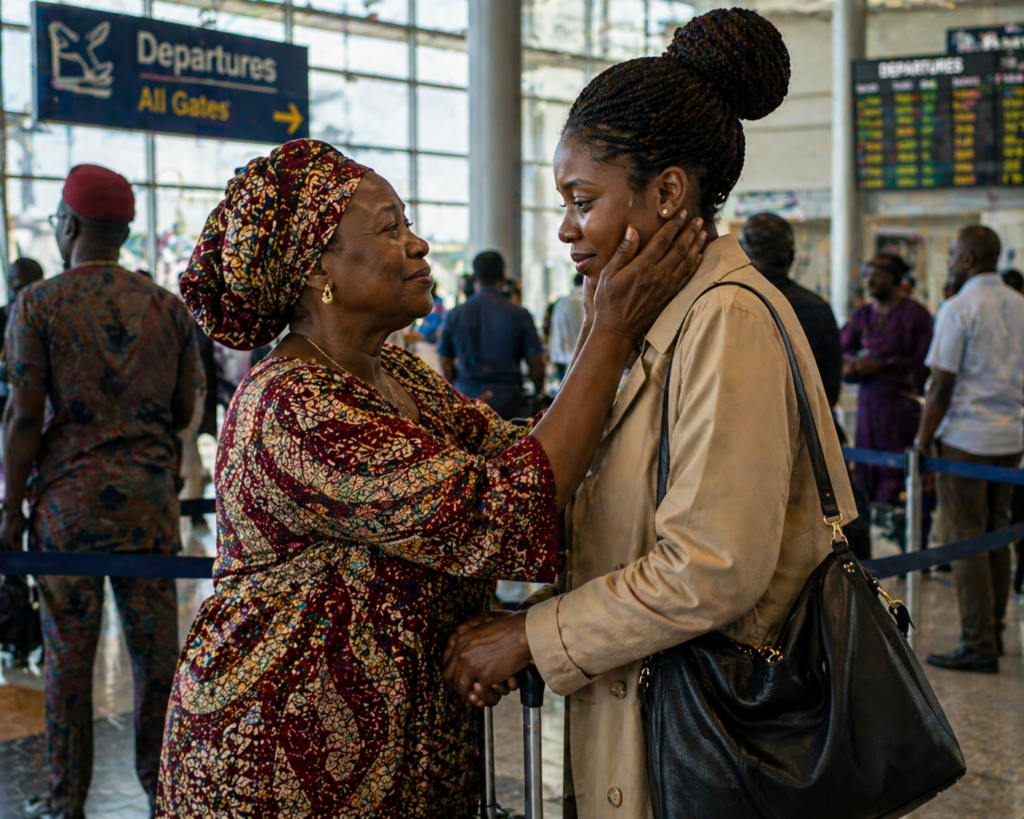
That was the last time I saw her. She died three years later, in her sleep.
For months after she died, I felt lost. I wanted to give up, to come back home and forget everything.
But then I remembered her voice. “You were saved for a reason.”
So I continued.
I worked hard, harder than I thought I could. I qualified as a doctor. I became a Consultant Paediatrician.
She was looking at me differently now, not just as her mother. But as something else.
“And next week,” I said, “we are going back to that same village.”
“To open a clinic,” she said quietly.
“Yes.”
“So… children won’t die like that again?”
“That is the plan. My team and I will be training new nurses and starting a health programme for children.”
She looked down at her hands, then back at the half-packed suitcase.
Then at me.
“So…” she said slowly, “we’re not just going to the village to sit down.”
I laughed softly. “No. We are not.”
She stood up suddenly and walked to her suitcase. Without complaining, she picked up the Ankara dress again and folded it properly this time.
“Maybe,” she said, trying to sound casual, “we can still go to Lagos after.”
“We will,” I said.
“And… maybe the village won’t be that bad.”
I raised an eyebrow.
She shrugged. “I mean… if that’s where everything started.”
I watched her for a moment. Then I reached out and touched her arm.
“You see now?” I said gently.
She nodded.
“Yeah,” she said. “I see.”
The End